Yes, consider this, the Greek: a-byssos
a: without
byssos: floor
Sounds like a conduit or passage to me. Very simple.
But I must ask: what happens if we break byssos down further? What can we obtain?
I do not know if this reasoning has any meaning to it, but, I will continue:
byssos supposedly has a Hebrew origin:
בּוּץ - the letters: "beth / bayit", "vav", "tsadi" - pronounced: "boots"
Here is a graphic of the letters without the dageshim (plural dagesh, dot multipliers) and with the tsadi being a non-final form for recognizability:
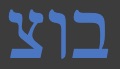
They say this means "to bleach" or "to be white" (WHICH I DO NOT BELIEVE TO BE CORRECT: see this updated thought below about the Arctic + mist / fog: The Captive Waters - Arctic home of the Vedas - #29 by Soretna).
Strange.
Now perhaps consider the "kabbalistic" definition of the letters:
בּ (beth / bayit):
- Eve,
- Man's first residence,
- Womb
- To come forth
- This also has a "dagesh" or dot in the middle of the letter which signifies a "doubling" or multiplication / strengthening.
- Number: 2
וּ (vav):
- Nail
- Divine decree or covenant
- Also a vowel marker ("o" or "oo"); this has a middle dagesh which makes it "oo"
- Might also be considered a "connector" between concepts/letters.
- Number: 6
ץ (tsadi / tzadhe) - final form, non final is: צ
- Zion or Zi
- Repentant saints
- Righteous Zadok (priest)
- Virgin
- Virtue
- Number: 90
The numeric value should be 98.
Again, I would like to see such an analysis of the Sanskrit and/or Cuneiform if possible, as well as equivalent words used in those to check alignment + difference and so on.