Folks , this has some good content :-
Regards
Folks , this has some good content :-
Regards
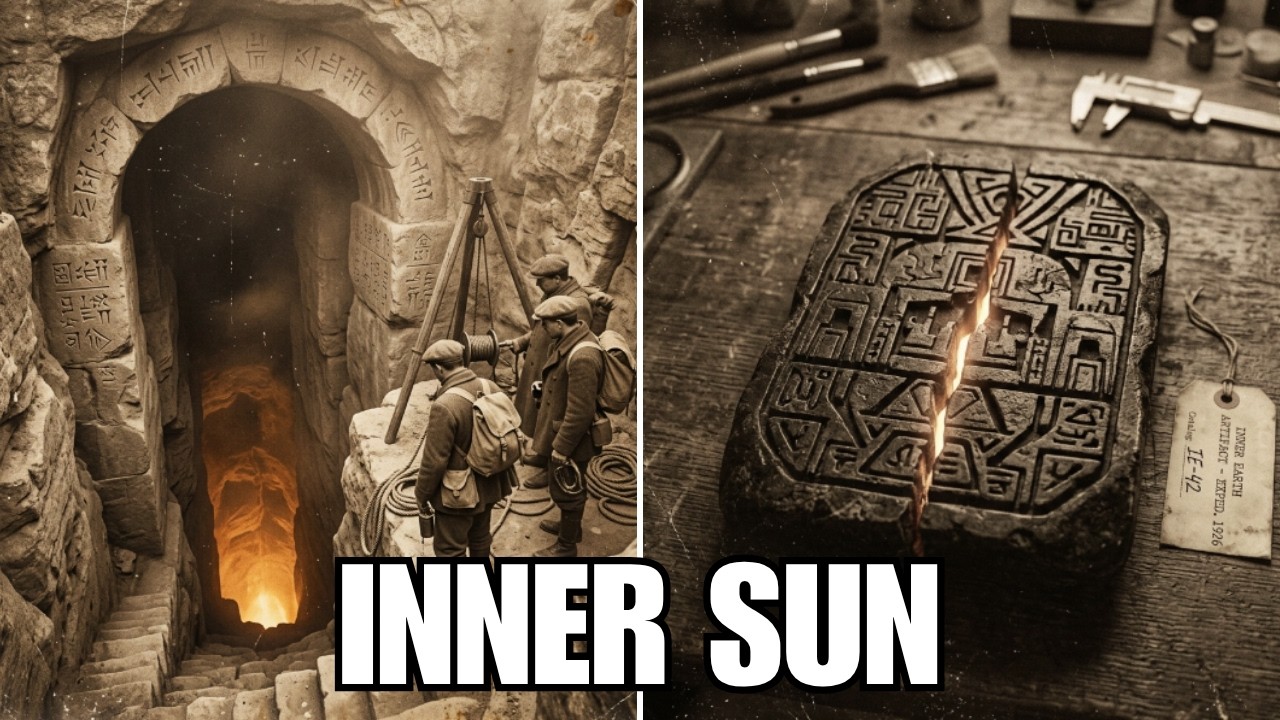
https://www.youtube.com/watch?v=OBu4ntmK4vs&t=244s The Sumerian Tablet That Says the Moon Was Brought Here — And Describes What's Inside It
Sidhartha,
You have made a significant find!
Cheers!
It's incredible that there is such a significant amount of information on the hollow earth and the inner sun, but everyone is so brainwashed that they are immediately dismissive of it.
FREEND LINK ATLANTIS BOOK Atlantis Avalon Thule by Roland Josse
I translated it to English 
https://u.pcloud.link/publink/show... HHOLOW ESRTH BOK S LINK https://sigillumalexio.com/
HOLLOW EARTH BOOOKS LINK
·
World Mother Earth by Karl Neupert
Germany 1940
https://u.pcloud.link/publink/show...
Concave Earth Books
https://u.pcloud.link/publink/show...
via https://librariumesotericum.com Sažmi
Svijet Majka Zemlja od Karla Neuperta
Njemačka 1940.
https://u.pcloud.link/publink/show...
Konkavne zemaljske knjige
https://u.pcloud.link/publink/show...
putem https://librariumesotericum.com
HHHHeeeEEEE
https://u.pcloud.link/publink/show...
A Geocosmos: Mapping Outer Space Into a Hollow Earth
– Mostafa A.Abdelkader Sažmi Concave Earth books - pCloud
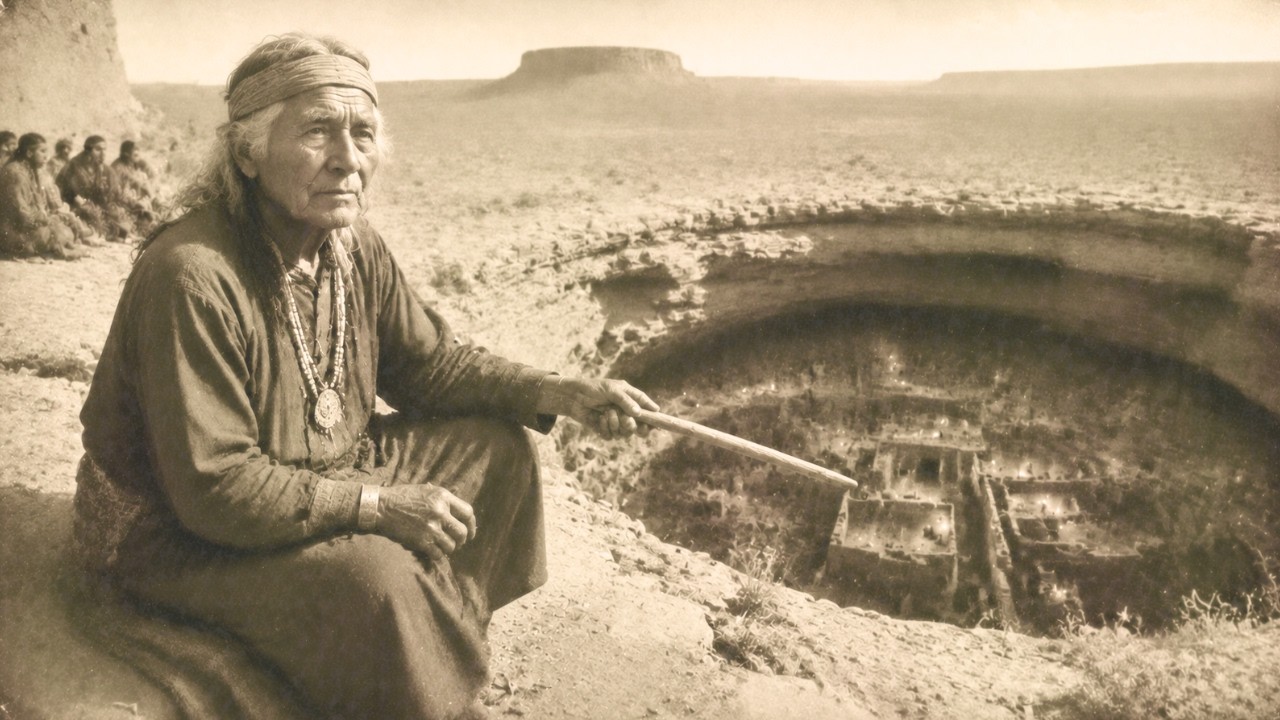
The Last Hopi Elder Who Remembered the Underground Cities — What He Said Was Living Below (1889 The Hopi understanding of the world is vertical in a way that no other indigenous tradition of the American Southwest expresses with the same specificity. The sipapu — the emergence point through which the Hopi people entered this world from the one below — is not metaphorical in the Hopi cosmological framework. It is geographical. It has a location. The world below from which the emergence occurred is not a symbolic underworld in the sense that comparative religion uses that term — it is a prior world, a world that existed before this one, that is still present below the surface of the current one, and that the Hopi oral tradition maintains specific and practical knowledge about in ways that the academic frameworks that have studied Hopi cosmology have consistently absorbed as theology while missing entirely as geography. In 1889, an ethnographer working with the Hopi communities of the First Mesa documented, across a series of sessions with the eldest surviving carrier of what the community identified as the deepest stratum of the underground knowledge, an account that went further than any previously recorded Hopi testimony on the subject of what existed below the current world's surface. The elder was dying. He knew he was dying. And he had decided, in the specific way that the dying sometimes decide, that the knowledge he carried was more important than the protocols that had governed its transmission — that passing it to a man with a notebook in a language the notebook's readers would understand was better than letting it end with him in a language nobody outside the tradition could read.
What the elder transmitted across those sessions was not cosmological in the register that the ethnographer's published account describes. The published account — three paragraphs in a Bureau of American Ethnology annual report — classifies the material as emergence myth elaboration, as a variant of the standard Hopi account of the worlds below, as theological content of the kind that every Pueblo tradition maintains and that the comparative religion literature of the period had provided adequate categories for. The field notes are not three paragraphs. They are forty-two pages. And the forty-two pages describe not a cosmological framework but a geography — specific, located, dimensioned, navigable in the way that a geography is navigable rather than the way a myth is navigable. The elder described cities. Not the ruins of cities — cities. Present-tense, currently inhabited, located at specific depths below the Colorado Plateau that he conveyed through reference to geological features the ethnographer could verify on the surface.
The forty-two pages have been accessed four times in the archive's records since the ethnographer's death. The most recent access was by a researcher working on Hopi cultural repatriation who noted in the access log, in the space provided for research purpose, a single sentence: verifying content for community consultation.  The community consultation, if it occurred, produced no published output. The forty-two pages remain in the archive. The three published paragraphs remain the only version of this testimony that the academic record acknowledges.
This video examines the full forty-two pages of the 1889 underground city account, maps the elder's geographic descriptions against the current geology of the Colorado Plateau, and builds the case that what the last carrier of the Hopi underground knowledge transmitted in 1889 was not theology but cartography — a map of what exists below the surface of the landscape that the Hopi have inhabited since before the memory of its existence begins.
 Comment below — based on the elder's geographic descriptions and the depths he identified for the underground cities, what do you think the Hopi tradition has been maintaining practical knowledge about for the entire period of their habitation of the Colorado Plateau, and why do you think the community consultation that accessed the forty-two pages produced no published output? We read every single reply and this community has brought Hopi scholarship, plateau geology, and archival research to this conversation that no single researcher has compiled in one place.
The Severed Timeline explores oral histories of ancient, subterranean civilizations hidden beneath the Arizona desert. These accounts, preserved by
@sidharthabahadur thanks very much for sharing this 
Thank you too, I'm trying to learn.
Concave Earth books - pCloud SHARE FREEND S
What the Hopi Say Is STILL Buried Beneath the Grand Canyon
https://www.youtube.com/watch?v=9HH2v5Kaw7k HOLLOW EARTH
https://www.youtube.com/watch?v=HR0Qs5oJIAU This Continent-Sized Herbig-Haro Plasmoid Destroyed the Ice Age Civilization | Dan Sutton ...Today we’re speaking with independent researcher Dan Sutton. In this special presentation of Blue Planet Red, we’re departing from our usual focus on Mars and pivoting to an extraordinary geological discovery here on Earth.
Mr. Sutton’s discovery just might resolve two mysteries that mankind has had for millennia – 1) What global catastrophe was associated with the period of time roughly 12,000 years ago known as the Younger Dryas? and 2) What’s the meaning behind the ancient rock carvings known as the Squatter Man found all over the world?
This colossal discovery we’re presenting today, called the Sutton Cicatrix, has been hiding in plain sight for thousands of years.
Music by Jeremy Williams
#iceage #youngerdryas #lostcivilizations #ancientcivilizations