The following videos offer an interesting perspective that I think may be often overlooked - and apparently there is a particularly interesting body of supportive data behind his remarks:
First video, summary and video:
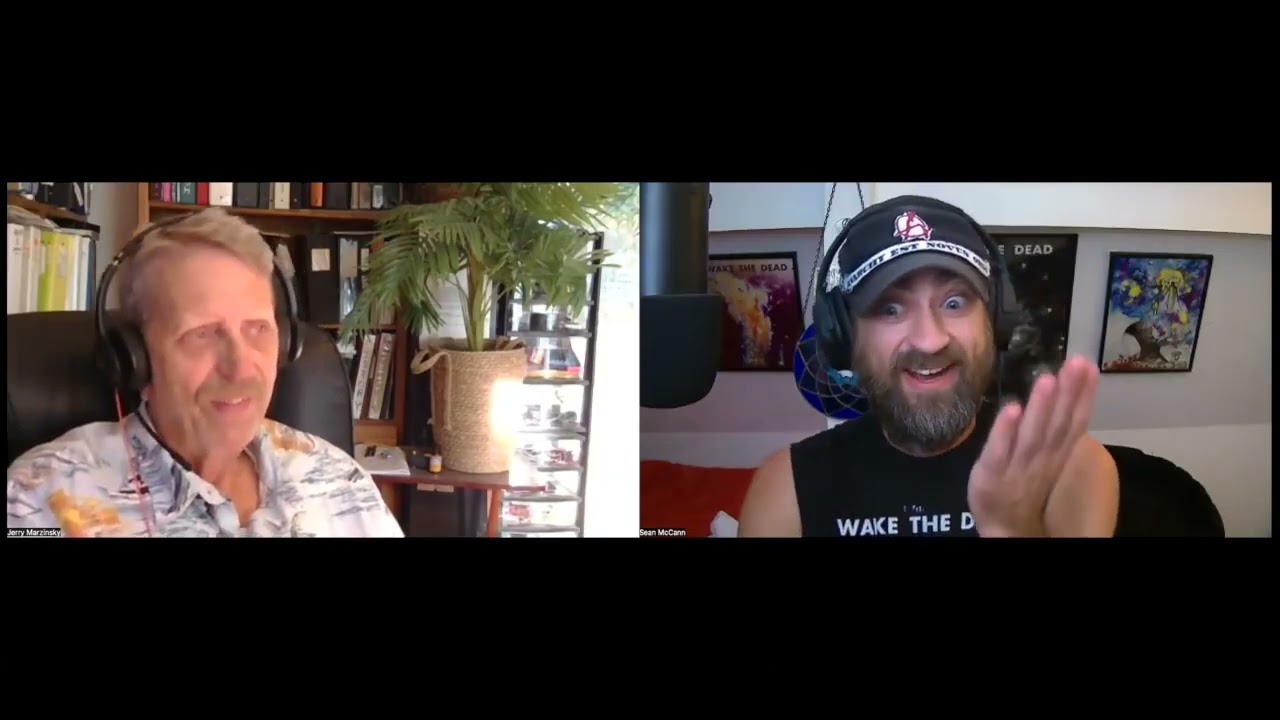
Jerry Marzinsky on "Wake the Dead" (host Shaun McCann) - the voices in our heads
Marzinsky is a retired licensed psychotherapist, 35+ years working with psychotic and criminally insane patients in large state psychiatric hospitals and Arizona prisons. BA psychology (Temple), MA counseling (Georgia), two years of PhD work. Co-author of An Amazing Journey into the Psychotic Mind: Breaking the Spell of the Ivory Tower.
Core position: what psychiatry files as "auditory hallucinations" are not hallucinations. They are external, intelligent, parasitic entities. He says the profession declared them hallucinations by proclamation, never by research, and that none of his colleagues were curious enough to ask patients what the voices actually said.
What convinced him, from clinical work:
- Patients hold long, coherent, two-sided conversations with something he couldn't hear - like listening to one end of a phone call.
- The voices sometimes supply information the patient could not have known and that checks out physically. He recounts a burglar told which alley the police were coming up and to hide in a dumpster, a meth user directed to strangers who showed up with more meth, and a man in San Diego navigated to a hidden Oregon field and told what to bring and when to stop going back. The pattern he describes: build trust with real help, then use it to destroy the person.
- The voices are consistently negative, derogatory, insulting, abusive and destructive. He argues they feed on the suffering that generates.
- Energy: patients rated their energy before and after the voices; the difference was statistically significant on a t-test. The one thing that reliably enraged the voices was telling the patient they were parasites - the thing they most wanted hidden.
- Asked directly what they are, the answer he heard repeatedly was that they are the person. Their aim is to get you to accept negative thoughts as your own. He says most negative thoughts entering your head are not yours, and that the childhood teaching that every thought belongs to you is the dangerous part.
On psychiatry: the chemical imbalance model came out of Eli Lilly's need to explain Prozac and has never been measurable - no test identifies which neurotransmitter is off or by how much. Diagnosis varies wildly between clinicians for the same patient. Antipsychotics suppress symptoms, damage the brain, and cure nothing. The function, in his read, is control. He also gives two field examples that broke his textbooks: two patients claiming the same identity simply agreed to share it rather than one abandoning the delusion, and an allegedly disorganized schizophrenic executed a multi-stage nighttime escape past three stations after leaving a very deliberate insult on his psychiatrist's desk.
Trauma and treatment: nearly all his patients have a core of severe physical, sexual or emotional abuse, or meth use. Trauma is the food supply. The Mace Energy Method removes the trauma; the entities weaken, complain of not getting enough, and in many cases leave. Most of his current clients are trauma cases, not voice-hearers.
Scaled up: he argues this is not confined to diagnosed patients - everyone gets hit to some degree; schizophrenics have just conceded more ground. He extends the model to addiction (discarnate alcoholics waiting to ride in on the drunk), to prisons, to media that keeps attention on violence and the physical, and to institutional hierarchies of obedience.
Practical advice: you cannot always stop a thought arriving, but attention is energy, and you control where it goes. Avoid material that feeds it - violent and crime media, porn, heavy metal. Turn attention inward and toward the spiritual; he recommends Swedenborg and Gnostic material. On Swedenborg's frame: each person has two guardian angels and two demons, the negative side moves freely against you, the guardians cannot act unless asked. The choice is always the person's.
Note on the second half: the conversation moves into current events - Epstein, Les Wexner's own published account of the "dybbuk" driving him, COVID and the vaccines, Fauci, Jimmy Savile, media and surveillance. Host and guest openly disagree on politics, particularly on Trump, and say so amicably. Marzinsky also mentions letting his license lapse rather than give the licensing bodies a lever to use against him. He closes on an optimistic note: corruption is being exposed, the exposure is the precondition for doing anything about it, and the only person you can actually control is yourself.
Site, MACE write-up, testimonials and booking: jerrymarzinsky.com
Second video, summary and video:
Jerry Marzinsky on the Jesus Way Podcast (ep. 029) - how negative entities hijack the mind
Same guest, different framing: this conversation is with a Christian/Nazarene-focused host, and it goes deeper into mechanism, personal experience, and what to actually do about it.
Opening indictment of the church: Marzinsky's first point is that the Christian church fails here. It talks about Jesus and God and good, which is fine, but God isn't what's causing the problem - the negative entities are, and most churches won't even mention them. These things thrive in obscurity and silence. They get away with murder because nobody knows how they operate.
Background: he started at Central State Hospital in Georgia - 10,000 patients, 200 buildings, its own mortuary, 30,000 buried on site. From there: private, county and state hospitals, mental health centers, and nearly 20 years in the psychology department of a state prison. Roughly half a century on the front lines.
On academia and psychiatry:
- Abnormal psychology textbooks list hundreds of disorders and not one cause.
- Students are denied access to clinical populations until after they're credentialed - "they make sure you're good and brainwashed before they let you loose in there." In 35+ years on the wards he never once saw a researcher on the front lines.
- The head of his PhD psychology department, a former preacher, presented a top-5% sample as if it were the whole population. When Marzinsky challenged it, the answer was that if readers don't catch it, that's their problem. He later notes the replication crisis figure: roughly 75% of published psychology can't be reproduced.
- The chemical imbalance story traces to Eli Lilly needing an explanation for Prozac. There is no baseline for what brain chemistry should be, no lab test, no EEG - fifteen or twenty minutes of questions and then a drug. He asked psychiatrists how they knew what was out of balance and by how much; the answer was that the pharmaceutical industry tells them.
- Antipsychotics are major tranquilizers. Long-term autopsies showed shrunken brains; the "Thorazine shuffle" was visible on the wards. He compares modern drugging to a daily chemical lobotomy that is more profitable and looks more humane. The DSM has grown from roughly 75 diagnoses in the 1950s toward 300, each arriving with a billing code.
- He was twice hauled into a psychiatrist's office and ordered to stop asking patients about their voices, on the grounds that asking reinforced the hallucination. One patient had reported him - at the voices' prompting.
How he broke from the model: patients held fully coherent two-sided conversations with something he couldn't see. Hallucinations are random; these ran patterns, and something has to hold a thing to a non-random pattern. The textbook claim that two patients with the same delusion couldn't coexist failed in front of him - the man simply agreed they could both be Jesus Christ. Out of hundreds of staff, he was the only one curious about the voices, and he gathered what he knew tidbit by tidbit until patients saw he was serious. At one point a voice told a patient to stop talking - he already knows too much. That was when he concluded they were conscious and aware.
The lake story - his own encounter. He prayed to hear the voices once. Weeks later, doing a survival float far out on a Georgia lake at dusk, thoughts began arriving: too far from shore, sun going down, you're going to drown. He was an experienced certified diver, not frightened, and knew the thoughts weren't his. Each time he surfaced the thing escalated, weaving in things that were verifiably true - a motorboat was in fact approaching, they in fact couldn't see him - building what he calls a "yes set," a salesman's technique. He asks the obvious question: why would he run a yes set on himself to drown himself? Resting on the lake bottom afterward in warm water, total darkness and silence, senses effectively switched off, he found the thing underneath: he was aware that he was aware. That, he says, is who you actually are - the listener, not the thoughts.
The critical detail: the voice sounded exactly like his ordinary internal monologue. No tone shift, no announcement. That is what makes them dangerous, and if you believe the thought is yours, you're done.
Patterns he documented (published on his site):
- Consistently negative, derogatory, insulting, abusive, destructive. Consummate liars about everything.
- Anti-religious. A patient recited the 23rd Psalm and reported the voices reacted like worms on a hot pan. He began handing out the 23rd Psalm to test it systematically. Weak voices go quiet in church; moderate ones get louder and try to drown out the preacher; strong ones drive the person out of the building.
- Louder after sunset, strongest between 3 and 4 a.m.; they don't want the person sleeping, because resistance collapses without sleep.
- They get louder when ignored, not quieter - "just ignore them" fails. Better to acknowledge and let it pass, or simply note "I see you," since they don't want to be seen.
- They foster isolation, demand attention, and maneuver constantly for more control - then use that control to get the person into trouble, which generates more of what they eat.
- They can access memory and use it to accuse.
- They insist on secrecy: tell anyone and you'll be called crazy and locked up. Which, he notes, is what actually happens.
- Hierarchy: he saw a "boss" replace a voice that wasn't cruel enough, and after clearing two voices from one man a third arrived - their boss, and angry. The host connects this to Jesus' description of the expelled spirit returning with seven worse.
- Openings: methamphetamine above all (prisoners called it the devil's drug), cocaine, Ouija boards, and spirit channeling.
- Cruelty for its own sake: one patient was told the voices would leave forever if he gouged out his eye. He did. They stayed and mocked him for believing them.
Energy and the parasite frame. He ran the same before/after energy ratings here, reported as an analysis of variance, statistically significant. The thing the voices least want the patient to know is that they are parasites - because once someone sees a leech on their arm, they act. Psychiatry instead offers a broken brain and no enemy to fight, which is hopelessness by another name. He cites 2023 figures of 49,316 US suicides and 1.5 million attempts, a 30.3% rise in the rate over twenty years, and the JAMA finding that psychiatrists take their own lives at 5.9 times the general rate - the people running the system.
The host's personal thread: his best friend, a happy and well-loved man, began hearing voices and changed visibly within two weeks of starting a prescribed amphetamine, then took his own life. Marzinsky's framing of high-value targets - beautiful souls, and preachers especially - lands directly on that.
MACE (Mace Energy Method). Developed by John Mace, a ship's captain who came to it through practical knowledge of energy rather than through psychological training. The model: during a trauma a decision gets made about who you are in it - most commonly "I'm worthless" - and that negative identity is buried in the subconscious while staying live, like a mind virus. It costs energy to hold down and detonates whenever someone resembling the original figure appears, producing the person you inexplicably can't stand. Every trigger strengthens it. MACE builds a bridge from that charge to spirit via attention and drains it; the spirit converts it. Afterward the memory remains but carries no emotional charge, and once drained it can't recharge - like a car battery run flat. Typically under an hour, and permanent.
Applied to voices, it removes the food supply first. Roughly a 30% rate of the voices leaving outright; where they don't, they weaken enough that the person can take control. He warns that the vacated space must be filled with something positive - Swedenborg, scripture, a spiritual path - or they return with company. Fewer than 100 practitioners exist worldwide; the chief trainer is in Australia; sessions run over Zoom.
Defense, in his own words: watch where thoughts come from. The brain is a radio receiver, not a generator - take it apart and nobody's inside. You can't always stop a thought arriving, but attention is energy and you decide where it goes. Give love rather than anger, since anger is food and love is the one thing they can't stand. And the deepest protection is simply staying present as the awareness underneath the noise.
Theological territory covered: the host reads a passage from the Clementine Epistle of Clement to James describing demons suggesting inharmonious thoughts that a person mistakes for their own soul's - Marzinsky's response is that it's exactly right, and that the Gnostics said the same thing and called them Archons. They also discuss the Law of One's polarity model, Swedenborg's two angels and two demons per person, the two-wolves teaching, and a shared position that guilt-and-depravity theology installs precisely the negative identities the entities feed on. Both express skepticism about biblical inerrancy and about a God requiring blood sacrifice.
Note: the last stretch ranges into contested current-events and health claims - chemtrails, suppressed cancer cures, "med beds," Vatican corruption - offered as the speakers' own views. Take them as such; the clinical observations are the substance of the episode.
Book: An Amazing Journey into the Psychotic Mind (with Sherry Sweeney)